Industrial control networks were built for reliability, not adversaries. We harden them without breaking operations.
The problem
Teams fast-tracking behind-the-meter microgrids to beat utility timelines are wiring legacy Modbus and BACnet vulnerabilities directly into primary power skids. Meanwhile, hyperscaler demand for real-time cloud telemetry has ended the era of the air-gap. The answer isn't isolation — it's hardware-enforced zero trust.
Zero-trust architecture down to the PLC backplane: micro-segmentation of control buses, strict authentication paths, and cryptographic device identity across facility automation layers.
Vulnerability mapping, protocol translation, and hardening for industrial control networks running Modbus TCP, BACnet, and DNP3.
Non-intrusive, hardware-level monitoring that detects spoofing and anomalous waveforms even when a device's software claims all is normal.
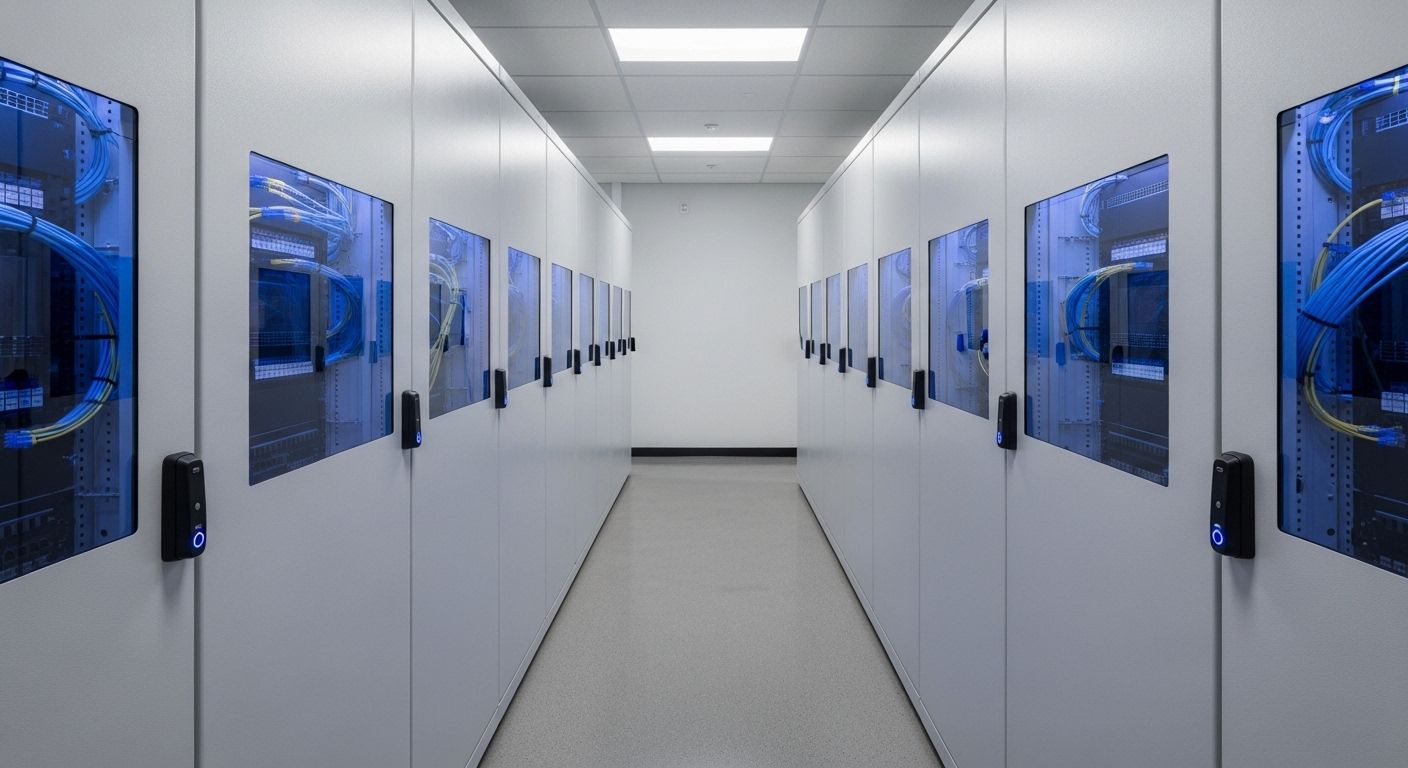
Access control, CCTV, intrusion detection, and facility security assessments — integrated with, not bolted onto, the control architecture.
Why it matters
Manipulate the step-changes on a battery energy storage system and you can induce transient stresses that physically destroy substation gear. Our job is making that class of attack impossible — protecting mechanical assets, not just data.
A conversation costs nothing. An unplanned outage costs everything.
